SpendRule Raises $2M to Help Hospitals Track and Control Spending
Product
The Operational Gap: Why Healthcare Cost Savings Disappear Before They Materialize
Written by

Joseph Akintolayo
Co-Founder
Date published
Reading time
Share blog

Healthcare organizations continue to face mounting financial pressure despite years of cost-reduction initiatives, procurement reforms, and digital transformation investments. While many systems successfully identify potential savings opportunities, very few sustain those savings at the operational level.
The underlying issue is not a lack of strategy. It is the absence of operational visibility, workflow accountability, and coordinated spend management across fragmented healthcare environments.
Healthcare organizations often possess large amounts of financial and procurement data, yet struggle to translate insight into operational action. The disconnect between procurement, finance, clinical operations, and supplier management creates inefficiencies that traditional cost-cutting approaches cannot fully solve.
In our recent post on spend entropy, we described how negotiated terms drift from operational reality. Here, we address why healthcare cost reduction must evolve from isolated financial exercises into integrated operational intelligence systems capable of driving real-time decision-making across the enterprise.
The Problem
Healthcare systems operate across highly fragmented operational environments, with multiple facilities, different procurement platforms, independent departmental workflows, and thousands of suppliers feeding disconnected financial and operational data. The interoperability gap between these systems is itself a well-documented barrier to coordinated decision-making across the enterprise. Within that environment, cost management is hard to enforce consistently.
A typical large health system processes more than 200,000 purchased-services invoices per year, often across hundreds of contracts. Line-level validation at that scale exceeds what manual review can sustain.
The symptoms are consistent across organizations:
Duplicate purchasing across departments
Contract leakage on negotiated rates
Inconsistent supplier utilization
Poor spend visibility and delayed approvals
Limited accountability between procurement, finance, and clinical teams
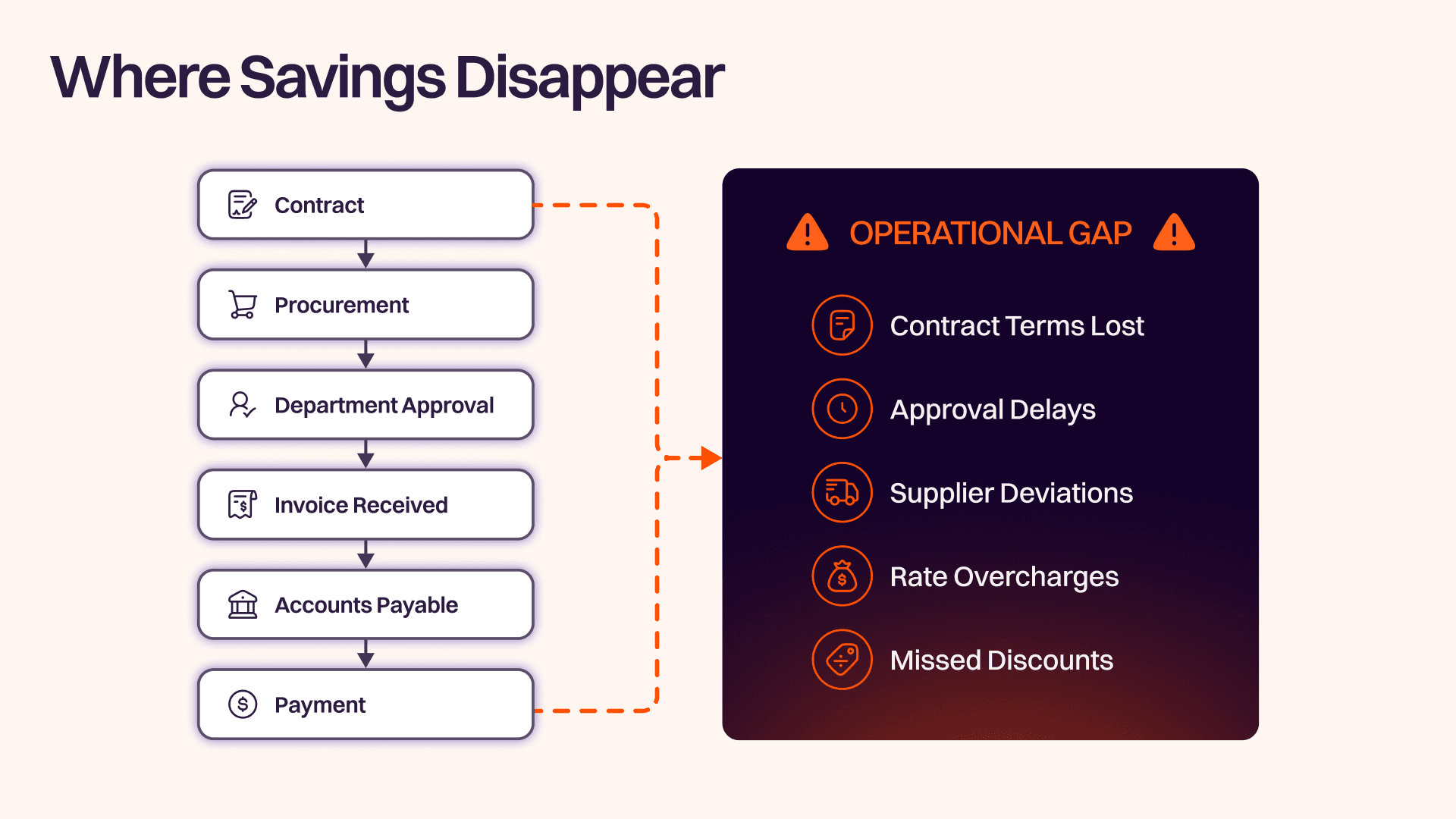
In many cases, leadership teams identify millions in projected savings opportunities, yet operational inefficiencies prevent those savings from materializing sustainably.
One of the largest gaps is the missing operational layer connecting procurement activity, supplier behavior, approval workflows, and financial oversight in real time. As a result, organizations continue reacting to spending after it occurs instead of managing it proactively.
The Current Industry Approach
The healthcare industry has historically approached cost reduction through:
Strategic sourcing
Group purchasing optimization
Consulting engagements
ERP implementations
Retrospective recovery audits
AI and analytics pilots
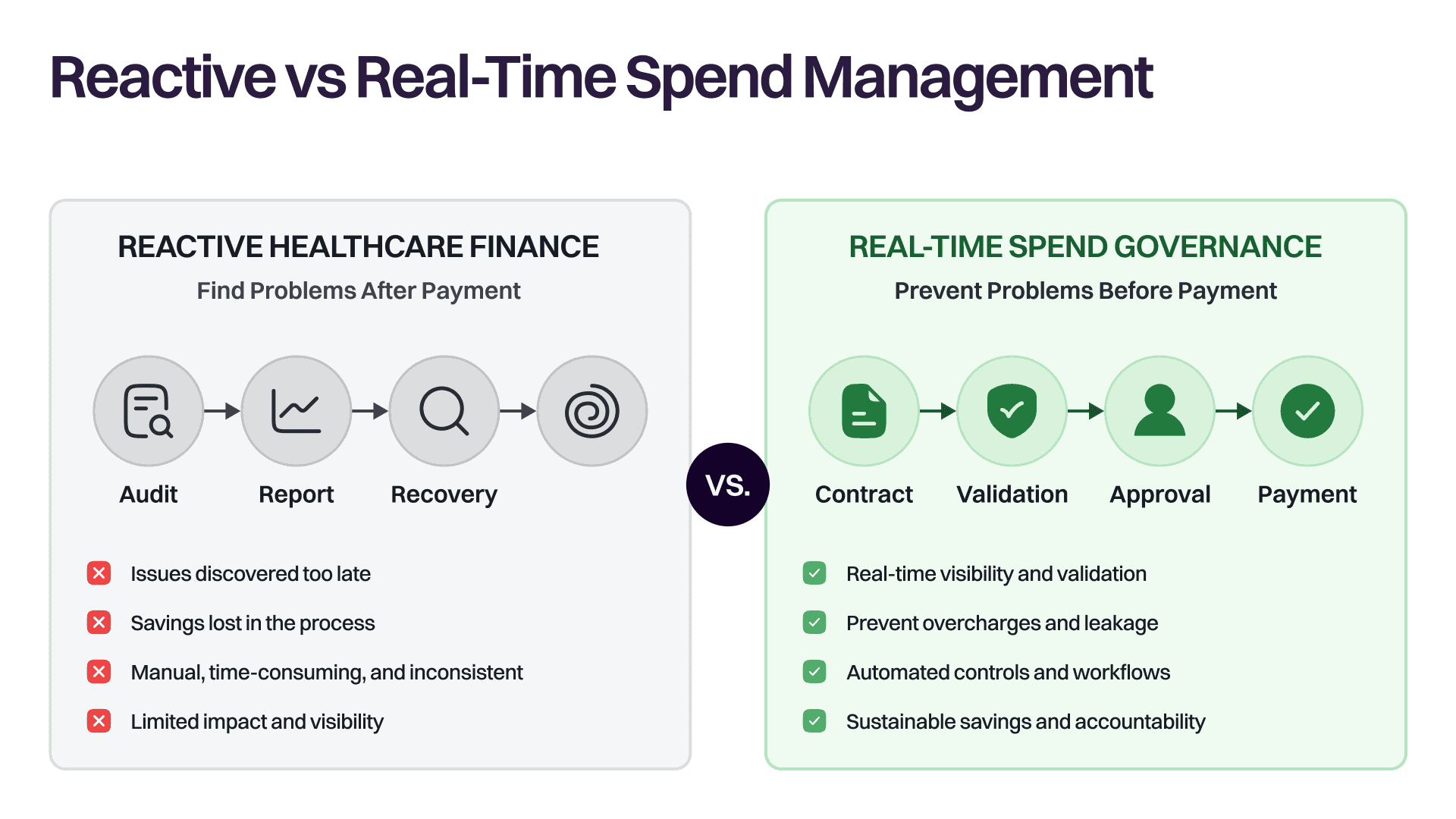
These efforts often produce strong recommendations and valuable reporting capabilities. However, many fail to solve the operational execution problem.
Most solutions focus on visibility after transactions occur rather than enabling operational control during decision-making. Retrospective audits, currently the most common response, recover approximately 14 cents per dollar of overcharge identified.
The pattern repeats across functions:
Finance teams review spend reports weeks later
Procurement teams struggle to enforce compliance
Clinical departments maintain independent purchasing habits
Leadership lacks real-time operational coordination
This creates a recurring cycle where organizations repeatedly identify savings opportunities without establishing sustainable operational discipline. Technology alone is not enough if workflows remain fragmented.
Key Insight: Operational Fragmentation Is the Real Cost Driver
The central failure in healthcare cost reduction is operational fragmentation.
Healthcare systems do not lose money simply because costs are high. They lose money because operational decision-making is disconnected across systems, departments, and stakeholders.
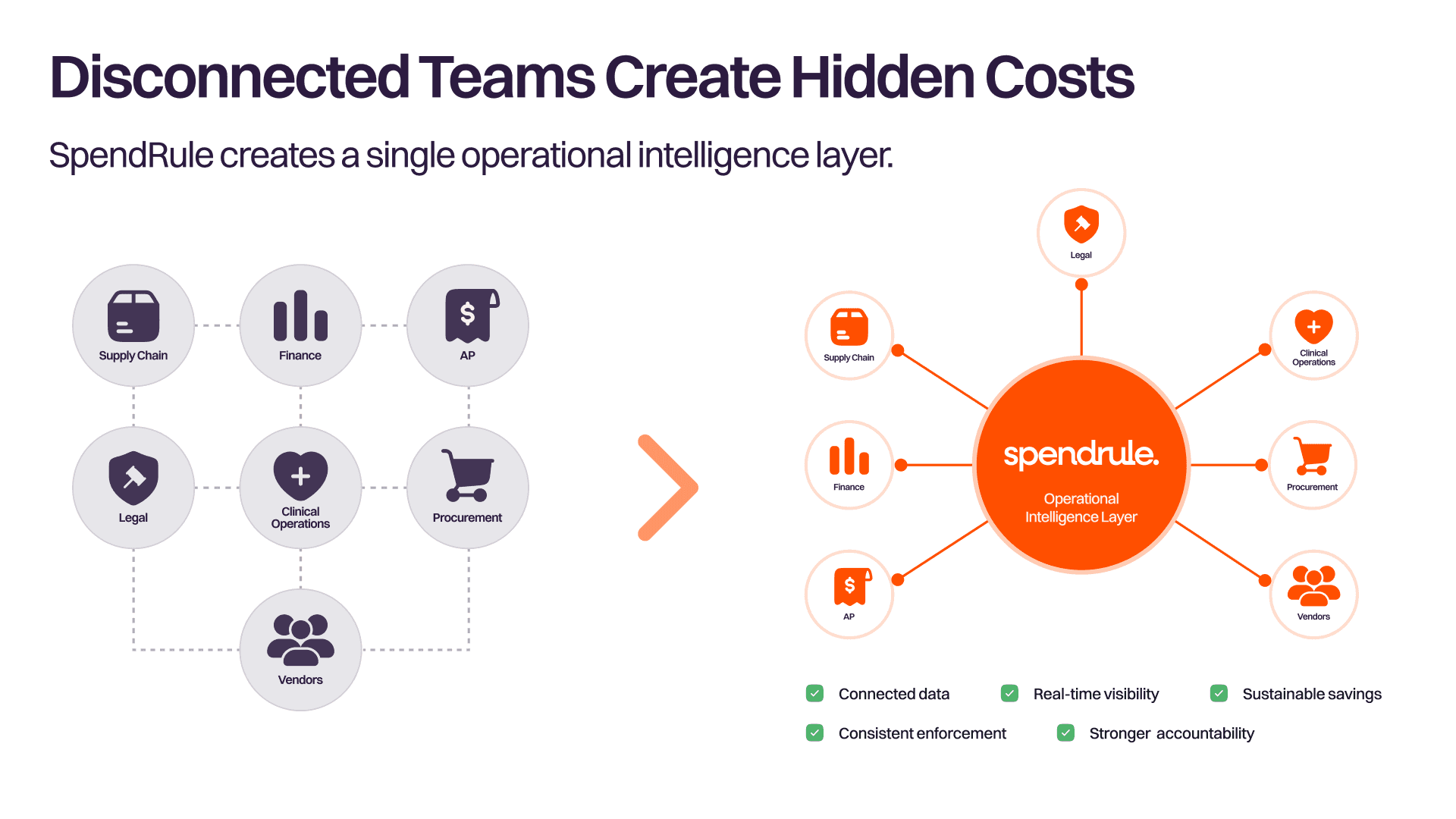
At SpendRule, we believe the future of healthcare spend management is not just analytics. It is operational intelligence. Enterprise technology research points the same direction: durable value comes from connecting workflows end to end rather than deploying isolated tools. Organizations need systems capable of:
Monitoring spend activity in real time
Connecting procurement and finance workflows
Identifying inefficiencies before costs escalate
Standardizing supplier oversight
Driving accountability across operational teams
The most successful healthcare organizations will be those that operationalize financial discipline directly within day-to-day workflows.
The Operational Reality
In practice, healthcare operations remain highly manual and reactive, a pattern consistently reflected in research on healthcare operational and AI-adoption trends. Many organizations still depend on spreadsheet-based tracking, email approval chains, siloed procurement systems, fragmented supplier communication, and delayed reporting cycles.
Operational teams are often focused on maintaining continuity of care and ensuring supply availability under significant pressure. Financial optimization naturally becomes secondary when systems lack coordination and visibility.
This is one reason many AI pilots fail to scale in healthcare environments. AI can generate recommendations, but without workflow integration and operational adoption, the impact remains limited.
The opportunity is not simply digitizing procurement. It is creating the connected operational infrastructure that allows healthcare organizations to make faster, smarter, and more accountable spending decisions. With the sheer volume of data already available, the true challenge is operational alignment.
A Better Approach
Healthcare organizations need a new operational model for spend management, one built around visibility, coordination, and workflow intelligence. A modern approach should include five elements.
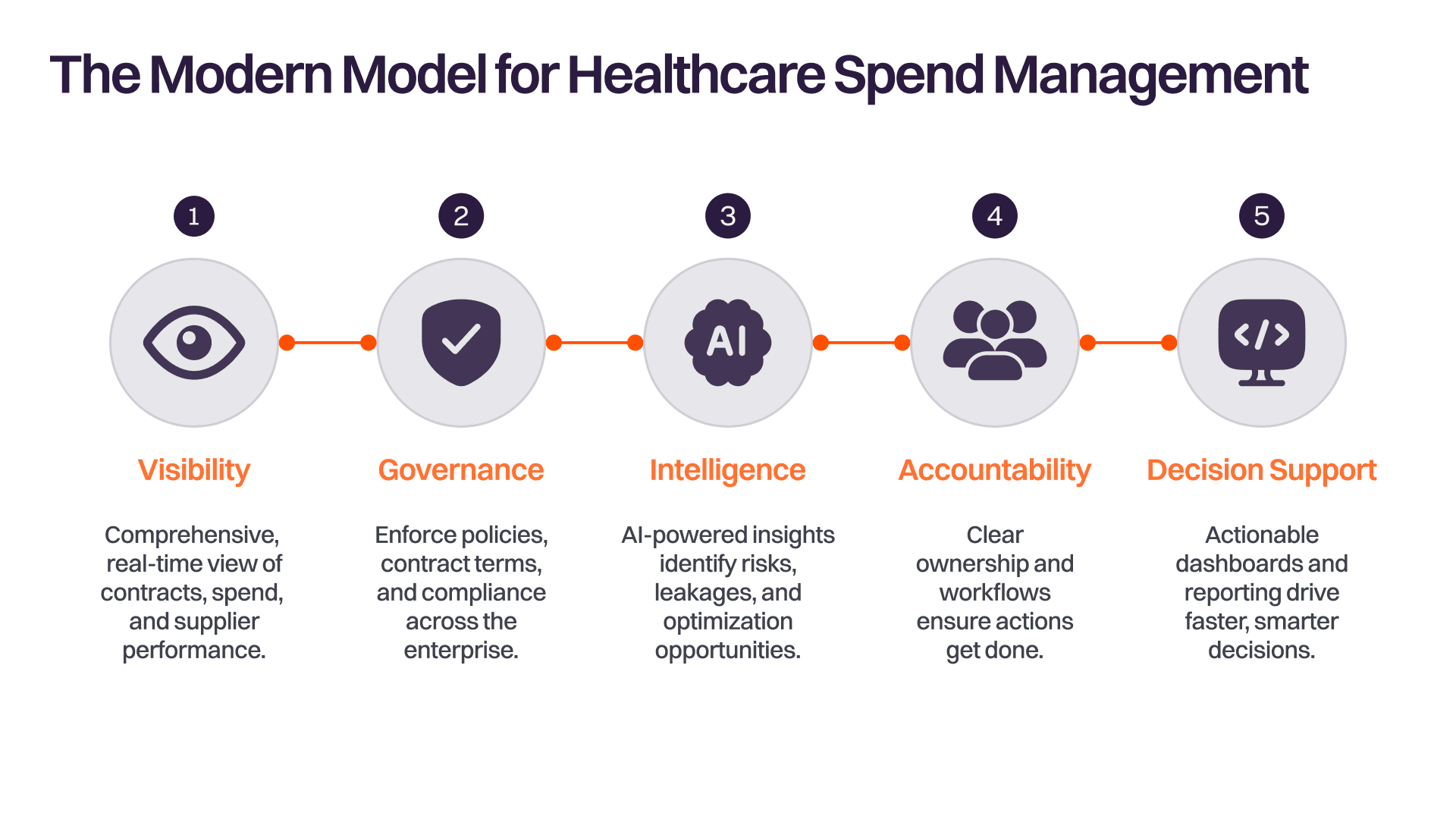
Real-Time Operational Visibility
Organizations need to see purchasing activity, supplier behavior, approvals, and spend patterns as they happen, not weeks later in a report.
Workflow-Centered Spend Governance
Financial controls must live inside procurement and operational workflows, not in retrospective reports.
Unified Operational Intelligence
Systems should connect procurement, finance, inventory, and supplier management into a centralized operational view.
Cross-Functional Accountability
Clinical, operational, procurement, and finance teams must operate with shared performance objectives.
Scalable Decision Support
Healthcare systems need technology platforms that simplify operational complexity instead of layering on top of it.
This is the philosophy behind SpendRule: helping healthcare organizations move from fragmented spend oversight toward intelligent operational coordination. The goal is not simply reducing expenses. It is enabling smarter operational decisions across the healthcare ecosystem.
Strategic Implications
The cost of inaction compounds. Health systems that continue to run spend management through email approvals, retrospective reports, and disconnected systems will see margin erosion that no sourcing cycle can recover. Without a change, supplier accountability slips, finance teams receive information after the fact when there is little left to influence, and what once looked like operational friction becomes a financial problem.
The organizations that pull ahead will be the ones that close the contract-to-payment gap. Instead of chasing money once it is already out the door, they will build controls directly into the purchasing process, because visibility, compliance, and cost control all follow from the same architectural choice: making spend decisions enforceable in real time, not auditable months later.
Conclusion
Healthcare cost reduction efforts fail when organizations attempt financial transformation without operational transformation. The industry has invested heavily in analytics, procurement modernization, and AI experimentation, yet operational fragmentation continues to undermine execution.
The future of healthcare spend management will require a shift from retrospective reporting toward real-time operational intelligence. Healthcare organizations need more than visibility into spending. They need systems that connect workflows, improve accountability, and enable better operational decisions at scale.
Sustainable financial performance in healthcare will not come from isolated cost-cutting initiatives alone. It will come from building operationally intelligent systems capable of aligning financial strategy with day-to-day execution.
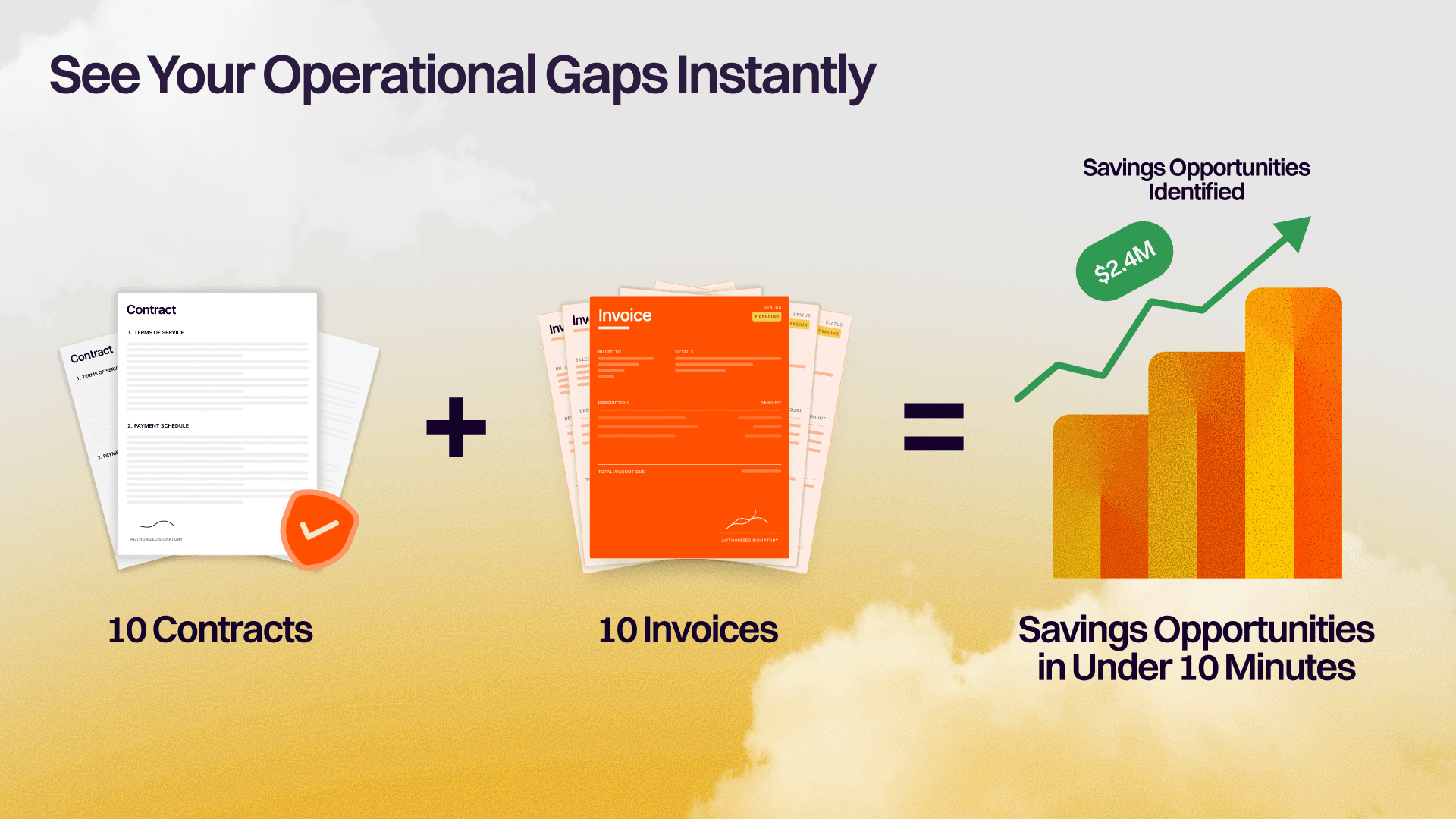
See what operational alignment can drive for your organization.
Give SpendRule 10 contracts and 10 invoices. We will surface real savings opportunities in under 10 minutes.
Cited and Referred Sources
HIMSS, digital health transformation and interoperability research, himss.org.
Becker’s Hospital Review, “8 Statistics on Health System Invoices and Accounts Payable,” beckershospitalreview.com.
SpendMend, “The Essential Role of Recovery Audits in Healthcare,” spendmend.com.
Accenture, Healthcare Technology Vision, enterprise AI transformation insights, accenture.com.
PwC Health Research Institute, AI adoption and operational healthcare trends, pwc.com.
Healthcare IT News, AI deployment and healthcare technology adoption coverage, healthcareitnews.com.
Harvard Business Review, “AI in the Health Care Industry: Driving Efficiency and Better Patient Experiences,” 2024, hbr.org.
Joseph Akintolayo
Co-Founder
Share blog